Nestled behind the coastal mountains that separate it from the sea, the Dalmatian hinterland remains an underexplored treasure trove of natural, gastronomic, and cultural wonders. The Zabiokovlje region, stretching from the Imotski area in the northwest to Vrgorac and Jezero field in the southeast, is framed by the majestic Biokovo mountains. This region offers an authentic, pristine experience, rich in natural beauty and fascinating attractions, making it a perfect destination for exploration and enjoyment.
Exploring this hidden gem will enrich you in every sense. With its expansive landscapes, quiet roads, and challenging routes, the Biokovo Hinterland is ideal for both serious cycling adventures and intense training. If you’re considering an active journey through this remarkable and preserved area but don’t know where to start, here’s an idea: explore the lakes of Zabiokovlje by bike and uncover the stunning scenery of Imotski, Vrgorac, and their lush, unspoiled surroundings.
Polje Jezero: Lake or Field?
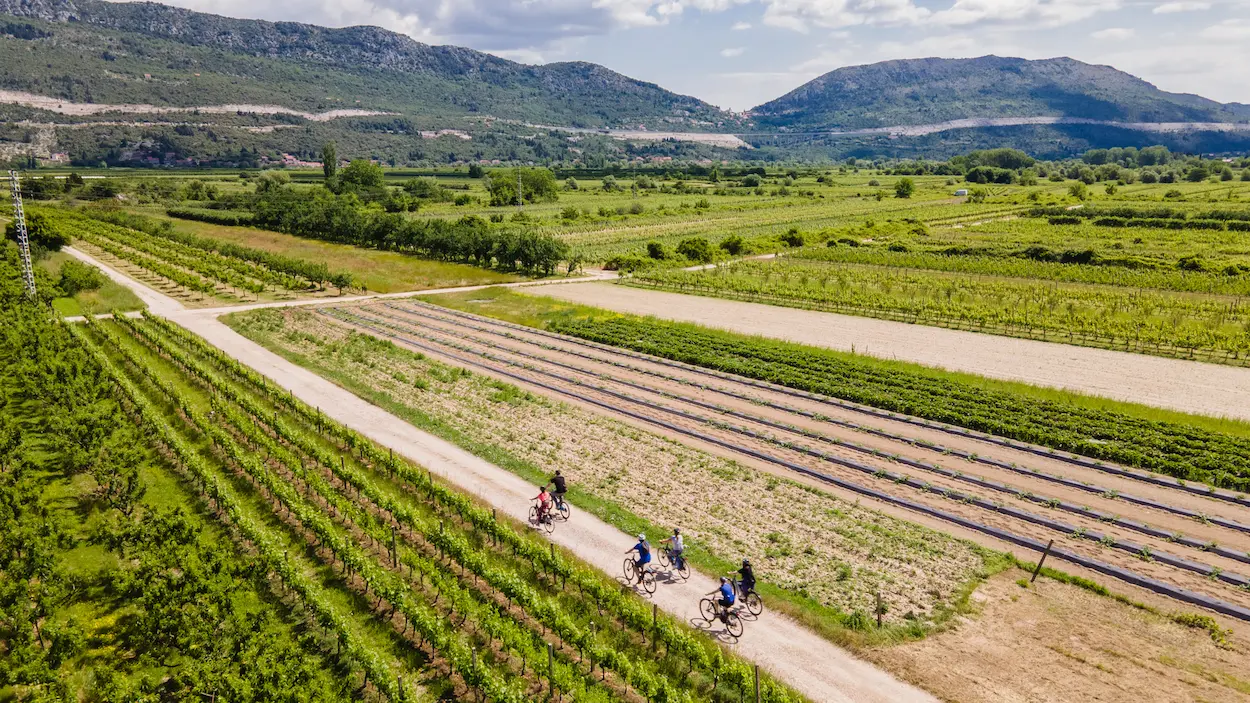
Both!
What is now a fertile field was once a lake that connected the Vrgorac area to the Ploče Hinterland further southwest. About a century ago, the lake was drained to create agricultural land. Today, the water that once filled the lake flows into the beautiful Matica River, and the former lakebed has become one of Dalmatia's most fertile and agriculturally active areas.
Polje jezero, also known as Vrgorac field, is the largest vineyard area in Croatia, with over 10 million grapevines, including unique native varieties like Zlatarica Vrgorska, Medna, Trnak, and Plavka, which have been rescued from obscurity.
The field is also a haven for trekking and cycling enthusiasts. Its green maze of gravel roads allows you to create your own routes, making it an ideal destination for active family outings and exploring the historic town of Vrgorac, perched above.
Cycling routes 243, 321, 341, and 600 lead to Vrgorac and Jezero field.
The Red, Blue, and Green Lakes of Imotski
On the northwestern edge of Zabiokovlje, near the historic town of Imotski, lie three lakes, each named for the color evoked by its waters and surroundings.
Blue Lake
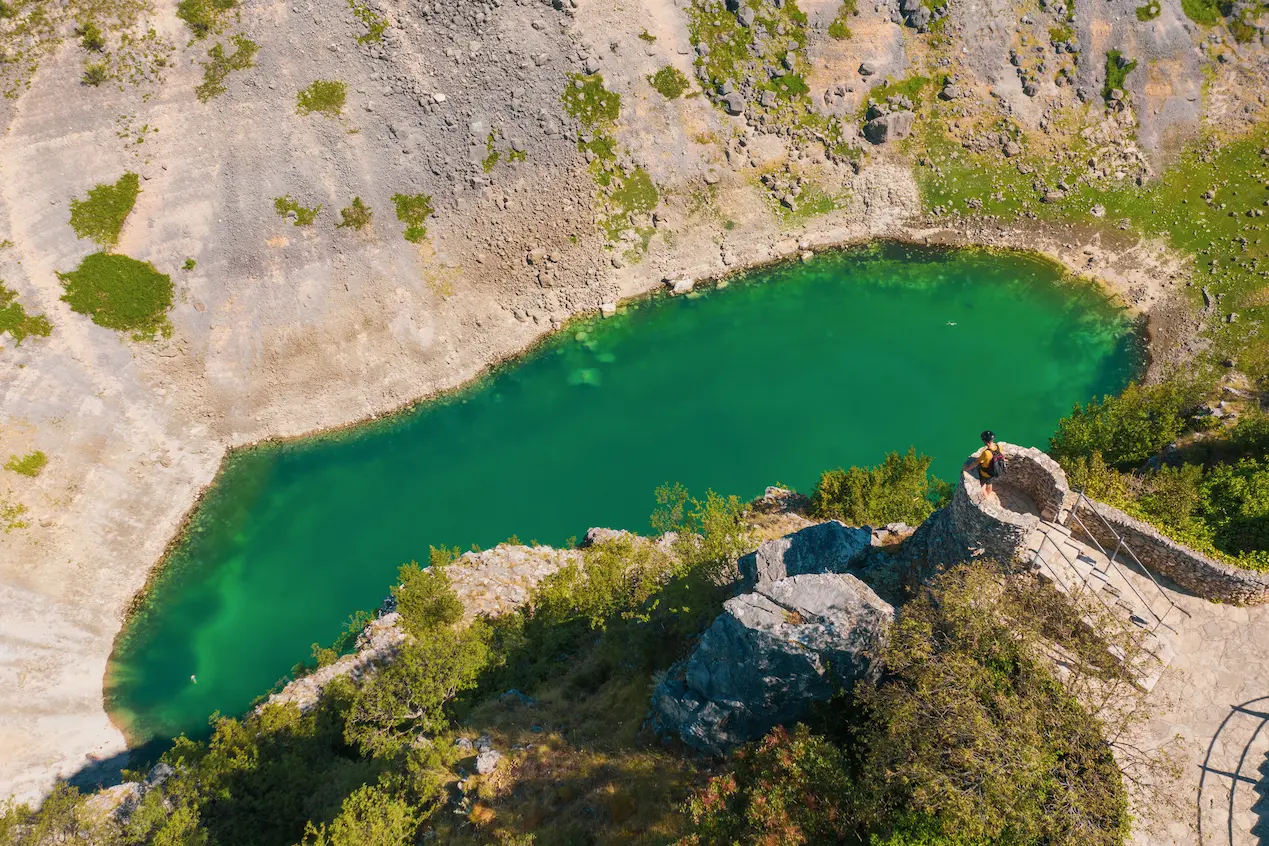
Just on the edge of Imotski, Blue Lake sits at the bottom of a sinkhole of varying depth, created by an extraordinary interplay of nature and geology. This natural phenomenon is a symbol of the town, deeply intertwined with its identity. The lake's size and depth fluctuate throughout the year, depending on rainfall. In particularly dry summers, the lake can dry up entirely, at which point locals have even been known to play football on its bed!
Red Lake
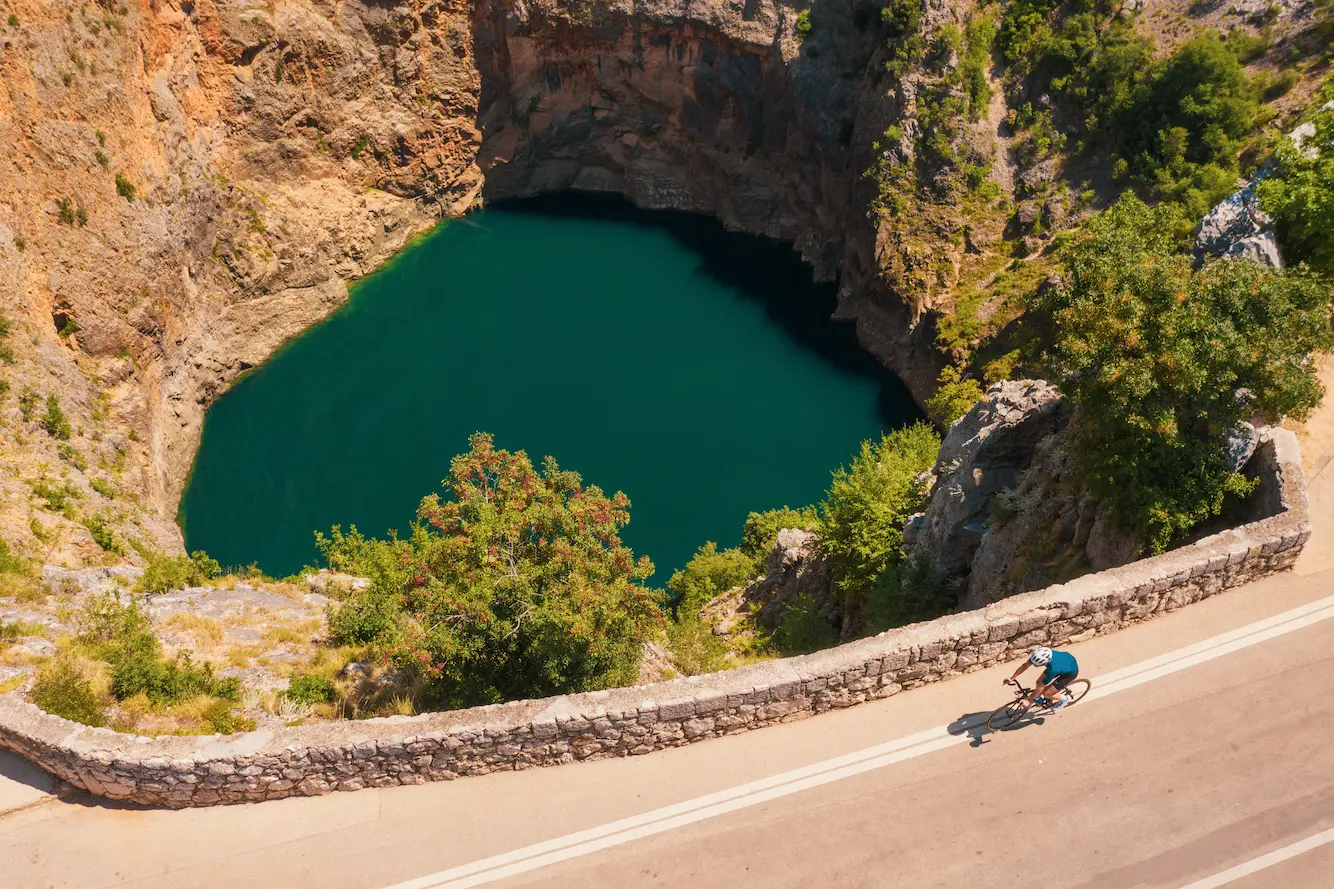
A short distance from Blue Lake lies Red Lake, named after the striking red cliffs that encircle it. Formed by the collapse of a cave, this lake is among the deepest in Europe, with a depth of over 500 meters and a diameter of 200 meters.
Green Lake
The Green Lake, the only artificial one among the trio, is an accumulation lake named for the green reflections on its surface. It has become one of the most popular destinations for day trips and recreational activities in this part of Dalmatia.
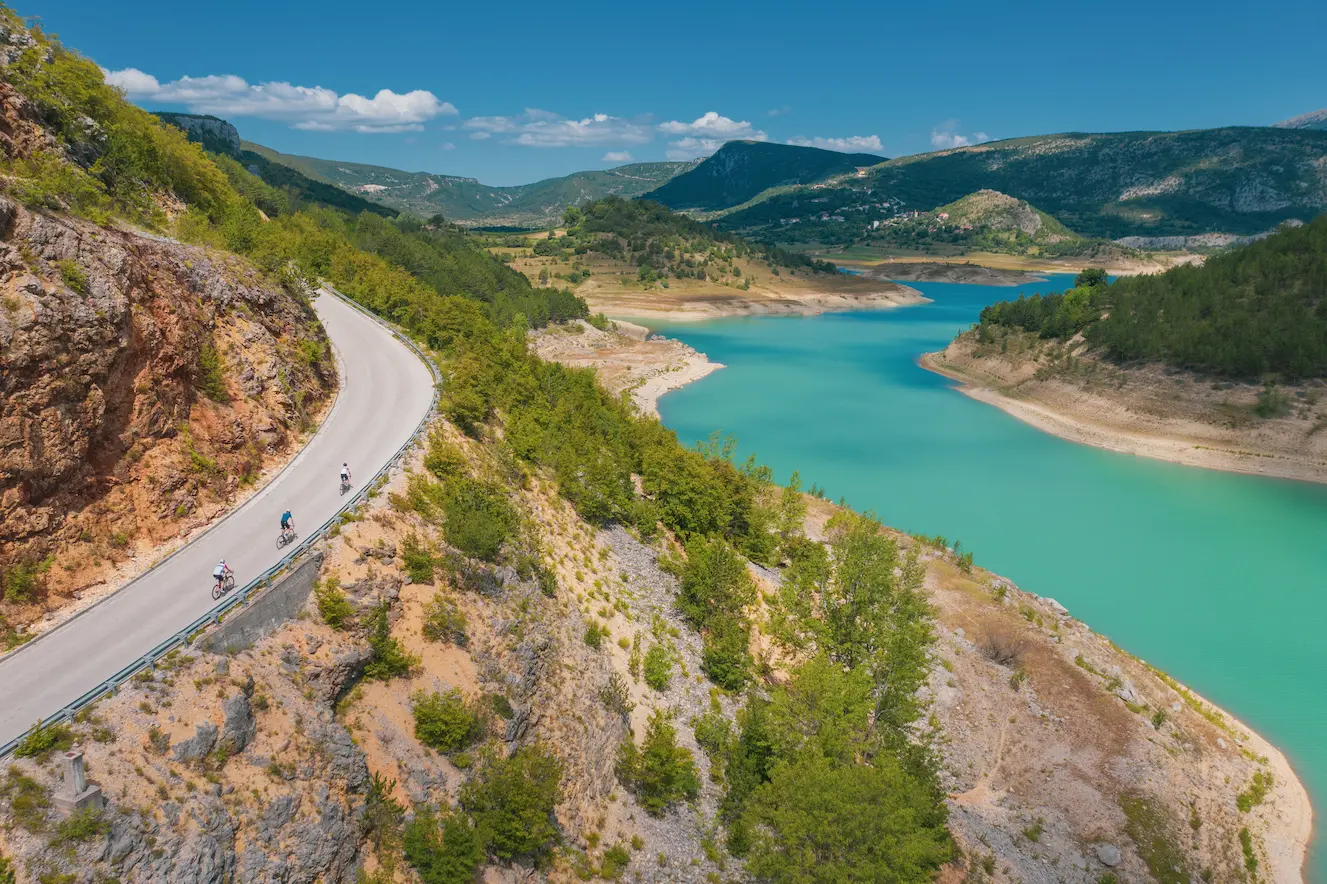
The three lakes are connected by cycling routes 201, 243, and 600, making them an essential part of any Zabiokovlje cycling itinerary.


